
Composting is a great way to turn kitchen scraps and garden waste into nutrient-rich soil, but adding the wrong materials can create problems. There are several items that should not be composted because they can attract pests, produce unpleasant smells, slow decomposition, or contaminate the finished compost. Knowing what belongs in your compost bin is just as important as knowing what to add. Keeping unsuitable waste out helps maintain a healthy compost pile and produces better-quality compost for your garden.
Why It Matters What You Put in Your Compost Bin
Knowing the items that should not be composted keeps this balance steady. A successful compost pile needs the right balance of organic materials, moisture, air, and microorganisms. When unsuitable items enter the mixture, they can disturb this balance and affect the entire composting process.
Here are some common problems caused by composting the wrong materials:
- Unpleasant smells: Meat, dairy, and oily leftovers can produce strong, unpleasant odours as they break down.
- Pests and unwanted animals: Food scraps such as meat and cooked leftovers can attract rats, flies, and other pests.
- Slow decomposition: Certain materials take a very long time to break down, making the composting process less efficient.
- Contamination: Plastics, treated wood, and chemically coated materials can introduce unwanted substances into finished compost.
Being careful about what goes into your bin helps maintain a healthy composting environment.
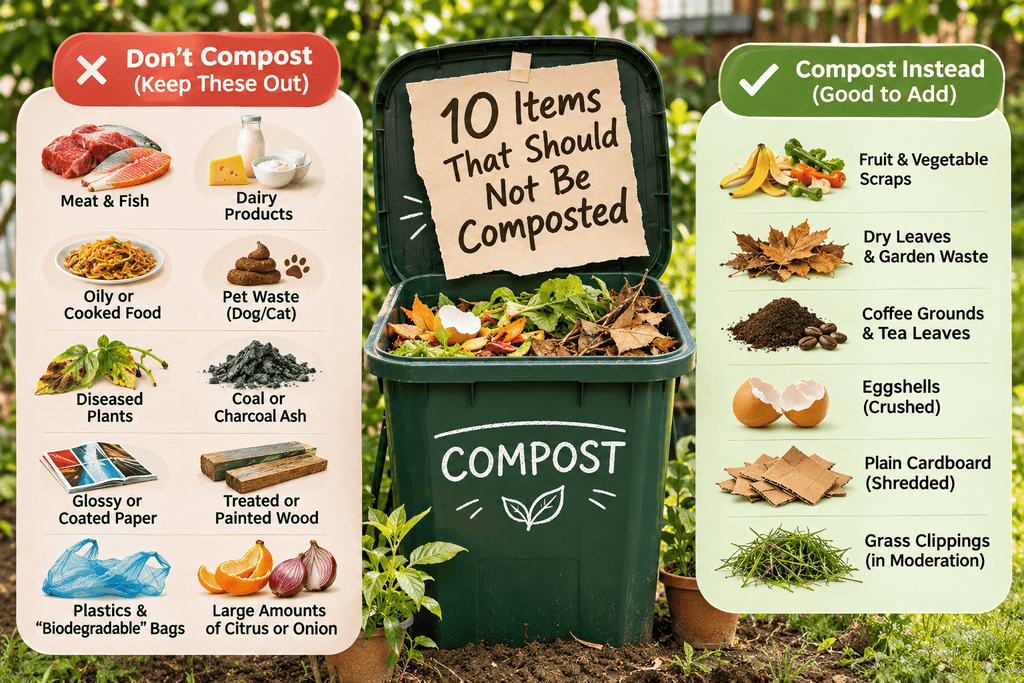
10 Items That Should Not Be Composted
Not everything that looks natural or biodegradable is suitable for a compost bin. Here are ten materials you should generally keep out of your regular home compost pile.
1. Meat and Fish
Raw or cooked meat, fish bones, and seafood leftovers should generally be avoided in home compost bins. They can produce strong smells as they decompose and attract rats, flies, and other unwanted pests.
What to do instead: Put meat and fish scraps in your designated food-waste collection system or use an approved commercial food-waste facility.
2. Dairy Products
Milk, cheese, yoghurt, butter, and other dairy products are not recommended for ordinary home composting. They can create unpleasant odours, attract pests, and make the compost pile difficult to manage.
What to do instead: Dispose of spoiled dairy products through your local food-waste collection service, if available.
3. Oily or Cooked Food
Greasy leftovers, cooking oil, fried food, and heavily seasoned cooked meals should stay out of a regular compost bin. Oils can coat organic materials, interfere with airflow, and create unpleasant smells.
What to do instead: Let small amounts of cooking oil cool and dispose of them according to local waste guidelines. Keep greasy food leftovers in your designated food-waste disposal system.
4. Pet Waste
Dog and cat faeces, used cat litter, and other pet waste can contain harmful bacteria, parasites, and pathogens. A typical backyard compost pile may not reach the temperatures needed to destroy them safely.
What to do instead: Dispose of pet waste in accordance with local municipal guidelines. Do not use compost containing untreated pet waste on vegetable gardens.
5. Diseased Plants
Plants infected with fungal diseases, bacterial infections, or persistent plant pathogens should not be added to an ordinary home compost pile. If the pile does not get hot enough, these organisms may survive and spread to healthy plants when compost is reused.
What to do instead: Separate infected plant material and follow local green-waste disposal or approved treatment guidelines.
6. Coal or Charcoal Ash
Ash from coal and charcoal briquettes may contain chemicals, heavy metals, or other residues that can affect soil quality. Adding it to compost can introduce unwanted contaminants.
What to do instead: Allow the ash to cool completely and dispose of it according to local waste guidelines. Avoid adding coal or briquette ash to your garden compost.
7. Glossy or Coated Paper
Glossy magazines, laminated paper, wax-coated sheets, and heavily printed paper may contain coatings, inks, or additives that are unsuitable for composting.
What to do instead: Send recyclable glossy paper to an appropriate paper recycling facility where accepted. Keep laminated and coated materials out of your compost bin.
8. Treated or Painted Wood
Painted, varnished, pressure-treated, and chemically treated wood should never be added to compost. These materials may release chemicals and preservatives as they break down, potentially contaminating the finished compost.
What to do instead: Take treated wood to an appropriate waste collection or disposal facility. Untreated, untreated-by-chemicals natural wood scraps may be compostable when properly shredded.
9. Plastics and Biodegradable Bags
Regular plastic bags, wrappers, packaging, and synthetic materials do not break down into compost. Even bags labelled biodegradable or compostable may require specific industrial composting conditions that a home compost bin cannot provide.
What to do instead: Separate conventional plastics for recycling where accepted. Check whether certified compostable bags are accepted by your local composting facility before disposing of them.
10. Large Amounts of Citrus or Onion
Citrus peels, onions, and similar kitchen scraps are not necessarily harmful to compost. However, adding very large quantities at once can slow decomposition or disturb the balance of a small compost pile.
What to do instead: Add citrus peels and onion scraps in moderate quantities, chop them into smaller pieces, and mix them with dry materials such as fallen leaves or shredded cardboard.
What to Do Instead: Better Ways to Manage These Items
The items that should not be composted don’t all have to go into general waste. Keeping unsuitable materials out of your compost bin does not mean all of them need to go straight into general waste. Different materials require different disposal methods.
Here are some practical alternatives:
- Meat, fish, and dairy: Use designated food-waste collection or approved commercial composting facilities.
- Oily and cooked food: Follow your local food-waste disposal guidelines and avoid pouring cooking oil down drains.
- Pet waste: Use designated pet-waste disposal services or municipal collection systems.
- Diseased plants: Dispose of infected plant material through approved green-waste channels.
- Coal and charcoal ash: Allow it to cool completely before disposing of it according to local guidelines.
- Glossy and coated paper: Recycle it where accepted, depending on the material and local recycling rules.
- Treated wood: Take it to an authorised waste disposal facility.
- Plastic and compostable bags: Separate recyclable plastics and check certification and facility requirements for compostable bags.
- Citrus and onion scraps: Add smaller quantities gradually and balance them with dry compost materials.
Remember, the items that should not be composted. The best disposal method depends on the type of waste and the facilities available in your area.
Final Thoughts
Good composting starts with knowing the items that should not be composted. Keeping meat, dairy, oily food, pet waste, treated wood, plastics, and other unsuitable items out of your compost bin helps prevent odours, pests, slow decomposition, and contamination. At the same time, remember that some materials, such as citrus peels and onions, can still be composted in moderation.
By understanding what belongs in your compost pile and finding suitable alternatives for the rest, you can make composting easier, safer, and more effective while reducing the amount of waste sent to landfills. If you share composting tips online, a little search engine optimization helps more readers find them.
For a simple daily routine, read our guide to waste segregation at home.
Leave a Reply